


Noob Battle: War Sandbox
0.00.00 Reviews
App Specs
- Version
- 2.1.2
- Updated On
- License
- Free
- Downloads
- 50,000+
- Developer
- Q8Power
- Categories
- Simulation
- Platform
- Android
Screenshots
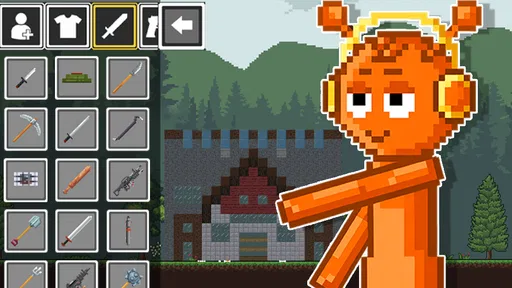
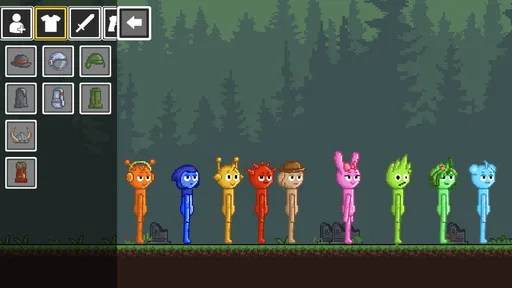
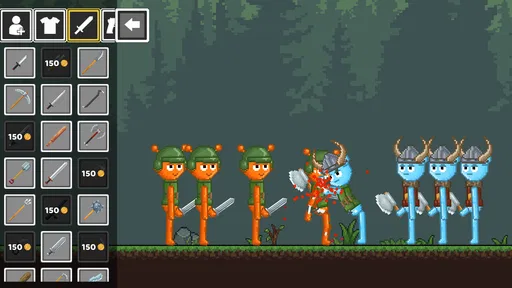
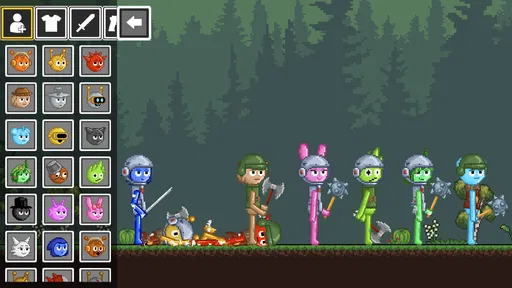
 Analysis by AppCompare
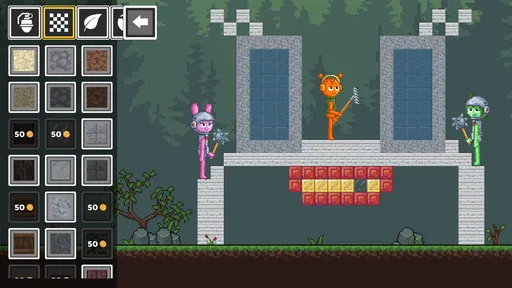
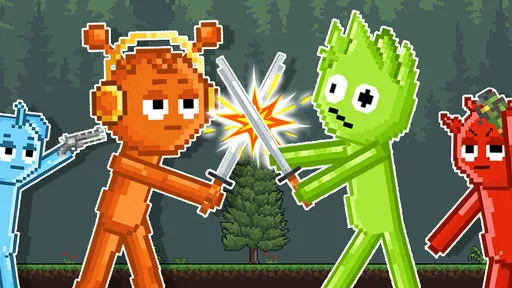
I spent time with Noob Battle: War Sandbox as a casual simulation game built around arranging chaotic battles rather than following a tightly scripted campaign. Its appeal is easy to understand: you place noob characters, watch ragdoll bodies react to the action, and use the sandbox format to create small war scenes that can be funny, unpredictable, or surprisingly messy. I found it most enjoyable when I stopped treating each setup as a puzzle with one correct answer and started using it as a toy box.
That distinction matters. This is not the kind of game I would choose when I want a deep strategy system, a long narrative, or a carefully balanced competitive match. It is better suited to short experiments, quick laughs, and players who enjoy seeing a simple plan collapse because physics takes over. The game is free, carries an Everyone age rating, and comes from Q8Power, so it is easy to approach for families and casual players who want something uncomplicated.
How the sandbox feels in everyday play
The first thing I noticed was the speed of the basic idea. The game does not need a long explanation before it becomes understandable: build a battle, let the units interact, and observe the result. That quick loop makes it a natural choice for a short break. If I only have a few minutes while waiting for an appointment or taking a break from work, I can get into the action without committing to a large campaign or remembering a complicated set of objectives.
The perceived pace depends heavily on how much is happening at once. A small setup feels immediate because the result is easy to follow. A crowded scene can feel more deliberate, not necessarily because the game is trying to be slow, but because several bodies and attacks are competing for attention. I actually think that hesitation is part of the charm in moderation: the outcome can become a little spectacle instead of a predictable animation.
There is also a useful difference between watching and experimenting. Watching a battle is the fastest way to understand the game, but changing the arrangement gives the experience more staying power. I began to think about where to place units, how much space to leave between groups, and whether a crowded formation would create a more entertaining chain of ragdoll reactions. Those small decisions give the sandbox more personality than the short store description suggests.
My practical advice is to begin with restrained scenes rather than filling the battlefield immediately. A smaller encounter makes it easier to see what caused a result. After that, adding more participants becomes a deliberate test instead of visual noise. This is one of the better ways to judge the game’s speed on a particular phone, because the experience changes naturally as the scene becomes busier.
Why the physics can be more important than winning
The ragdoll behavior is the main source of surprise. Characters do not always fall in a neat, tactical way, and that unpredictability makes losing less frustrating than it might be in a conventional strategy title. I often found myself replaying a setup simply because the first result looked odd and I wanted to see whether a slight change would produce a completely different chain of movement.
Worth Reading Before You Choose

Flipboard Shows What News Apps Must Do Beyond the Feed

Switching to Android Auto Means Rethinking Your Driving Routine

Google Calendar Makes a Crowded Week Easier to Manage

Ludo King Makes the Most of the Minutes Between Plans

Baby Panda World Brings Quick Play to Modern Phones, but Its Game Library Feels Busy

ESPN’s Live Game View Makes Following Close Games Easier
That same quality can disappoint players who expect precise control. If your enjoyment depends on every command producing an exact outcome, the loose physical reactions may feel more like interference than entertainment. Here, the game works best when I accept that the simulation is part of the show. The question is not always “Did my plan succeed?” but “What happened when I tried it?”
A useful workflow is to treat each battle as a small experiment. I make one meaningful change at a time, such as adjusting the starting arrangement, and then compare the result with the previous attempt. This keeps the sandbox from becoming random button pressing. It also helps reveal whether a surprising outcome came from the setup or simply from the physical chaos of the moment.
Heavy scenes and the limits of casual chaos
The most demanding moments are naturally the busiest ones. When many units are active together, the screen contains more movement, collisions, and simultaneous events to follow. Even when the game remains playable, the visual clarity can drop because several ragdoll reactions happen at once. For me, that was less a technical problem than a readability problem: the larger the scene, the harder it became to tell which decision caused the result.
That is why I would not automatically equate a bigger battle with a better battle. A compact arrangement can be more satisfying because the cause and effect are easier to understand. Large setups are best used when the goal is spectacle, while smaller ones are better for testing an idea. This trade-off is a concrete reason to vary battle size instead of always choosing the most crowded option.
Players using older or less powerful phones should approach the busiest experiments gradually. I would begin with a modest number of units, observe how the device responds, and only then increase the complexity. This is not a promise of a particular frame rate or battery result; it is simply the sensible way to use a physics-focused sandbox when hardware capability can differ widely between devices.
Resource demands also depend on how long a session lasts and how much is happening on screen. A quick, simple battle is a lighter use case than repeatedly creating crowded scenes. If the phone becomes warm, the interface feels less responsive, or the action becomes difficult to read, reducing the size of the experiment is the first adjustment I would make. The game’s appeal does not require maximum scale every time.
Stability, interruptions, and recovering from a messy result
My impression of reliability is tied to the simplicity of the core loop. A battle can be started, observed, and abandoned without a large amount of progress to protect. That makes recovery easy after an unsatisfying result: I can reset my approach mentally and create a different arrangement rather than worrying about losing a long quest or a carefully developed character.
This also makes the game forgiving for casual use. If I put it down after one experiment, I do not feel as though I have fallen behind. When I return, the basic concept is still clear. That is a strength compared with more demanding simulation games that expect players to remember systems, resources, or extended goals between sessions.
The limitation is that a sandbox without a strong long-term structure can feel directionless. After several similar experiments, I may wonder what new objective I am pursuing. The answer has to come from my own curiosity: testing formations, creating comic situations, or seeing how the physics handles a different arrangement. Players who need explicit missions and a steady sense of advancement may find the recovery from one battle easy but the reason to begin the next one less compelling.
When a scene becomes confusing, I recommend restarting with fewer moving parts rather than trying to interpret every collision. That simple reset is more useful than blaming the outcome on a single unit. It turns recovery into part of the play style: simplify, test, and then build back toward a more ambitious scene if the phone and the player both handle it comfortably.
Compatibility and the kind of phone that suits it
The game supports Android devices running version 7.0 or later, which gives it a broad starting point for Android users. That does not mean every compatible phone will deliver the same experience, especially in a physics-heavy sandbox where scene size affects what is happening at once. I would judge the game by its smaller experiments first, then decide whether the device feels comfortable with more ambitious battles.
Because it is free and rated for Everyone, the entry barrier is low. A parent looking for a simple game that can be understood without a long tutorial may appreciate that accessibility, while younger players can enjoy the visual humor of ragdoll movement. Still, the Everyone rating should not be mistaken for a guarantee that every child will find the open-ended format engaging. Some children prefer clear levels, rewards, and goals; this game asks them to invent much of the entertainment themselves.
The current version is 2.1.2, and the game was released on Aug 5, 2026. I would keep the version in mind when troubleshooting because performance and behavior can change as an app is updated. If the game feels different after an update, it is sensible to test a simple battle first rather than immediately recreating the largest scene. That gives a cleaner impression of whether the issue is related to the setup or the software environment.
Storage and battery expectations should also be approached practically rather than emotionally. A short session with a small battle is a modest use case, while repeated, crowded simulations ask the phone to keep track of much more activity. I would avoid judging the whole game from one extreme test. The experience is flexible enough that players can choose a lighter style when they want a quick diversion and a more demanding style when they are near a charger or using a stronger device.
Who will enjoy it, and who should choose something else
I think this game is a good fit for players who enjoy emergent behavior. If you like placing pieces, making a prediction, and then laughing when physics produces something unexpected, the sandbox has a clear appeal. It is also suitable for people who want a game that can be played in brief bursts without a complicated commitment. The free price makes that experimentation easier because trying it does not require deciding whether a substantial purchase is worthwhile.
It is less suitable for someone looking for a conventional war strategy game. The setting may suggest tactics, but the real pleasure comes from simulation and physical reactions rather than a deep command structure. A traditional strategy alternative would be better for players who want carefully balanced resources, planned campaigns, or victories that consistently reward precise decisions. Likewise, a level-based action game would be a stronger choice for anyone who wants constant objectives instead of self-directed play.
It may also be a weak match for players who dislike repetition. The game’s replay value comes from changing the setup and interpreting the result, not from a guaranteed stream of new story content. If the first few experiments do not make you curious about trying another arrangement, the open sandbox may not develop enough momentum to hold your attention.
For a realistic everyday scenario, I can imagine using it during a short commute break: create a small battle, watch the outcome, make one adjustment, and stop before the session becomes a major drain on attention. I would not choose it for a long flight if I needed a game with a defined progression path, but I would choose it when I wanted something I could open and understand immediately.
Small habits that make the experience better
My first tip is to separate testing from spectacle. Use compact battles when you want to learn what an arrangement does, then switch to larger scenes when you simply want entertaining chaos. Mixing those purposes in one oversized setup makes it difficult to tell whether the result was clever, accidental, or unreadable.
My second tip is to change one variable at a time. If I move every unit and alter the whole scene simultaneously, I cannot learn anything from the result. A single adjustment gives the next attempt a clear purpose and makes the sandbox feel more like a creative simulation than a sequence of random outcomes.
My third tip is to use the phone itself as part of the decision. On a device that feels comfortable, I can gradually increase scene complexity. On a weaker or warmer device, I would keep battles smaller and focus on the most visible interactions. This approach protects the smoothness and clarity of the session without removing the game’s central idea.
Finally, I would stop while the experiments are still amusing. Because the game does not force a long session, there is no benefit in continuing after the physics has started to feel repetitive. Returning later with a fresh idea is more rewarding than trying to manufacture interest from the same arrangement.
My performance verdict
Q8Power’s simulation game succeeds when it stays small, playful, and unpredictable. I found its perceived speed strongest in short battles where the action was easy to read, while crowded scenes traded clarity for spectacle. Its recovery is friendly because a failed experiment carries little emotional cost, but its open-ended format means players must supply their own reasons to continue.
The game is not the right recommendation for a serious strategy fan, a story-focused player, or anyone who expects a clear progression ladder. For casual players, families, and physics-sandbox fans, however, it offers a straightforward way to create funny war scenes without demanding a large time investment. The best way to approach it is to start modestly, experiment deliberately, and let the ragdoll behavior provide the surprises.
With over 50 thousand installs, it has already found an audience, and its Everyone rating makes the concept approachable. My final view is positive but specific: this is a lightweight battle toy, not a full strategy campaign. If that sounds like the kind of flexible, unpredictable play you want, the free download is worth trying. If you need structured goals or precise tactical control, I would look elsewhere in the simulation and strategy space.
Pros
- Easy-to-learn controls make battles accessible to casual players.
- Sandbox maps encourage creative strategies and experimental setups.
- Varied units add tactical options during larger battles.
- Quick matches are convenient for short gaming sessions.
- Simple visuals help the game run on many mobile devices.
Cons
- Limited depth may make progression feel repetitive over time.
- Large battles can become difficult to follow on smaller screens.
- Some units may feel unbalanced in certain matchups.
- The cartoon-style graphics may not appeal to every player.
- Ads or optional purchases may interrupt the overall experience.
FAQs for Noob Battle: War Sandbox
What is Noob Battle: War Sandbox?
Noob Battle: War Sandbox is a casual physics-based battle game built around sandbox experimentation. Players can create or arrange combat scenarios, place characters or units, and watch chaotic fights unfold. Rather than following a traditional story campaign, the experience focuses on testing different setups, enjoying humorous animations, and discovering how the game’s physics react to weapons, obstacles, and opposing forces.
How do you play Noob Battle: War Sandbox?
Gameplay is generally based on preparing a battlefield and then allowing the selected characters or armies to fight. Depending on the available mode and level, you may choose units, position them, select equipment, or interact with objects in the environment. The appeal comes from trying unusual combinations, observing the results, and adjusting your strategy when a battle does not develop as expected.
Is Noob Battle: War Sandbox suitable for children?
The game uses a cartoon-style presentation and exaggerated physics rather than realistic military visuals, which can make it accessible to younger players. However, battles still involve fighting, weapons, and characters being defeated. Parents should review the game’s store rating, advertising content, in-app purchase settings, and privacy information before allowing children to play, especially on a shared device.
Does Noob Battle: War Sandbox require an internet connection?
The core sandbox battles may be playable offline, which is convenient when you are traveling or have limited connectivity. Nevertheless, some features can depend on an internet connection, including advertisements, updates, online services, analytics, or optional purchases. Availability may also vary between Android and iOS versions, so it is best to check the requirements shown on the relevant app store before downloading.
Is Noob Battle: War Sandbox free to download?
Noob Battle: War Sandbox is typically offered as a free download, allowing players to try its main gameplay without paying upfront. Free access may be supported by advertisements or optional in-app purchases, such as removing ads, unlocking content, or obtaining additional resources. Check the current store listing for exact pricing, age rating, permissions, and purchase conditions before installing.


